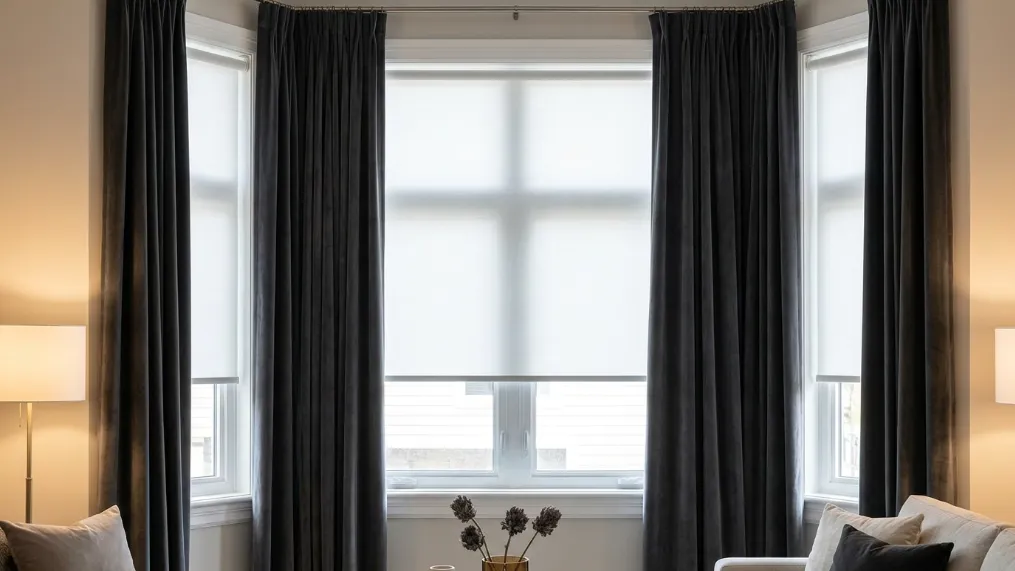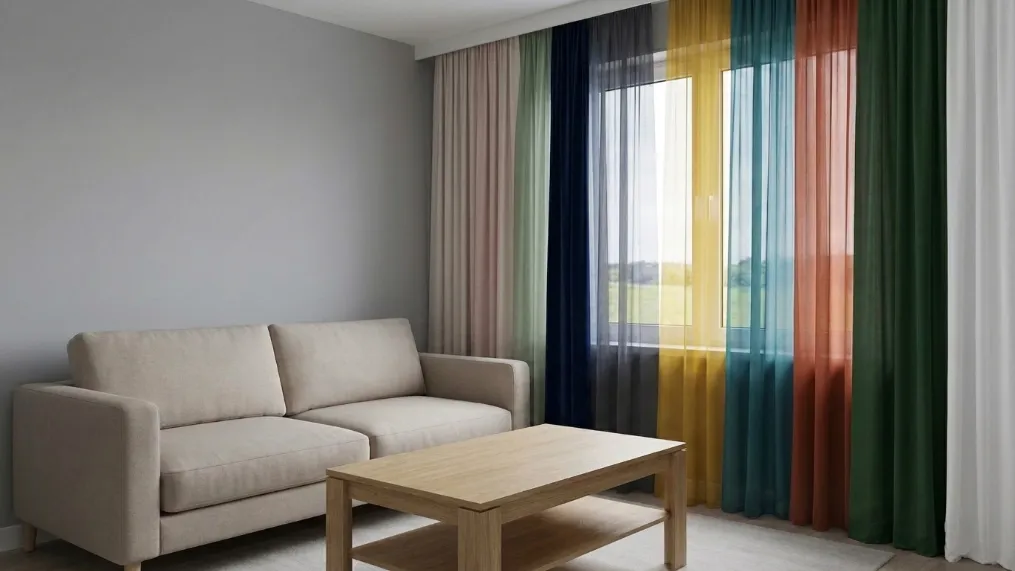
The best curtains for large windows combine enough fabric for full folds with a track strong enough to carry their weight. Choose sheer curtains for soft daylight, lined or blackout curtains for privacy and light control, or both on separate tracks. Measure the full track width rather than just the glass, and leave space beside the window for the curtains to gather when open.

Which Curtains Work Best for Large Windows?
For most large windows, full-length curtains on a ceiling-mounted track give a neat finish and are easy to use each day. The best fabric and lining depend on when you need privacy, how much sun reaches the glass, and whether the window includes a door.
A wide window needs more than a larger version of a standard curtain. Fabric weight, space for opening, and track support all become more important as the width grows. This guide from Arabic Curtains explains how those choices work together, so you can compare options before ordering.
| Window or Room Need | Suitable Curtain Setup | What to Check Before Buying |
|---|---|---|
| Bright living room with an open view | Sheer curtains with lined curtains on a second track | Sheers soften daylight but do not give reliable privacy at night |
| Bedroom with streetlights or early sun | Blackout curtains with an overlap at the centre | Light can still enter at the top, sides, and floor |
| Wide sliding balcony door | Curtains that open clear of the active door panel | The gathered fabric must not block the handle or walking route |
| Tall window that is hard to reach | Motorized curtains on a suitable track | Confirm fabric weight, power access, and manual operation during a power cut |
| Several windows across one wall | One continuous curtain run or separate curtain sections | A single run looks calmer, but separate sections give more control |
| Bay or corner window | A purpose-made bent track or joined track system | Check bend limits, curtain travel, and space around handles |
You can compare the main types of curtains before choosing the fabric and heading. A curtain heading is the top part that holds the folds and attaches the fabric to its track or pole.
Choose a Heading That Suits the Width
Wave curtains form soft, even folds and work well across wide windows because the pattern stays neat when the fabric moves. They need a matching track and gliders, which are the small moving parts that carry the curtain.
The main trade-off is depth. Wave folds extend in front of and behind the track, so a shallow ceiling recess may not have enough room for two layers. The supplier should check the fold depth before the track position is fixed. This explanation of wave curtains covers how the system works.
Pinch pleats give a more shaped finish and suit both modern and traditional rooms. Eyelet curtains, which slide directly onto a pole through rings in the fabric, are simple to use on smaller windows. On a very wide pole, support brackets can stop the eyelets from travelling across the full opening.
For curtains you will open every day, choose the heading and hardware together rather than buying fabric first.
How to Measure Curtains for Large Windows
Measure the planned track width and the finished curtain drop, not just the window frame. Then use the heading supplier’s fullness allowance to work out how much fabric the curtains need.

Use a steel tape or a suitable laser measure, and write down every measurement in the same unit. On a wide opening, a small error repeated across several panels can leave a visible gap.
- Mark the track position. Decide whether the track will sit on the ceiling or wall, and check for window handles, vents, and doors that open inward.
- Measure the full track run. Include any extension beyond the window where the curtains will gather when open.
- Measure the drop in several places. Check the left, centre, and right because floors and ceilings are not always level.
- Choose the opening direction. Decide between a centre opening, a one-way draw, or separate sections before the fabric is made.
- Confirm what the supplier means by width. A listed width may describe one flat panel, a pair of panels, or the finished coverage after pleating.
How Much Curtain Width Do You Need?
Many curtain headings use roughly 1.5 to 2.5 times the track width in flat fabric, but the correct amount depends on the heading and material. Fullness means the extra fabric that creates folds when the curtains are closed.
Use this calculation for an initial estimate:
Total flat fabric width = track width multiplied by the fullness ratio.
For example, suppose a window is 300 cm wide and the planned track extends 25 cm beyond each side. The track is then 350 cm wide. At 2 times fullness, the curtains need about 700 cm of total flat fabric width, usually divided between two sides.
That is a planning example, not a fabric cutting order. Seams, side hems, pattern matching, and the heading system can change the final amount.
| Fullness Used in the Example | Total Flat Width for a 350 cm Track | Likely Appearance |
|---|---|---|
| 1.5 times | 525 cm | Shallower folds, if the heading supports this ratio |
| 2 times | 700 cm | Fuller folds suited to many curtain styles |
| 2.5 times | 875 cm | Deeper folds, often useful for light sheers |
A fixed wave system may require a specific ratio, so do not reduce the fabric amount just to fit a budget. Too little fabric can pull the heading out of shape and leave the curtain looking flat.
Leave Room for Curtains When They Are Open
Curtains still take up space when fully open, and that gathered width is called the stack-back. Its size depends on the fabric, lining, heading, and number of folds.
Do not assume that a small extension beyond the window will keep all the glass clear. Ask the supplier to estimate the stack-back for your chosen curtains. Thick lined fabric usually needs more gathering space than a light sheer, and a single curtain drawn to one side puts the whole stack on that side.
For a sliding door, check where the gathered fabric will sit in relation to the door panel you use, rather than the centre of the window. A balanced-looking design is less useful if the fabric blocks the door handle.
Set the Length from the Actual Hanging Point
Measure curtain length from the point specified for your track or pole, since hooks, rings, and heading styles sit at different heights. Measuring from the ceiling alone can give you the wrong finished drop.
For daily use, curtains that sit slightly above the floor are easier to move and keep clean than fabric that pools. A small gap, often around 1 to 2 cm, can work well, but the installer should allow for uneven floors and any likely change in the fabric’s length. Read more about whether curtains should touch the floor before confirming the finished length.
Which Fabrics Give the Right Light and Privacy?
Choose curtain fabric based on the light and privacy you need before choosing its colour. Large windows make fabric more noticeable, but they also make gaps, glare, and see-through areas harder to ignore.

| Fabric or Lining | Best Use | Main Limitation |
|---|---|---|
| Sheer voile or light open-weave fabric | Soft daylight and a lighter daytime view | People may see through it at night when indoor lights are on |
| Unlined decorative fabric | Rooms needing gentle light filtering | Privacy depends on the weave and light conditions |
| Lined woven fabric | Living rooms needing more privacy and body | Standard lining does not guarantee blackout |
| Blackout fabric or blackout lining | Bedrooms, nurseries, and screen rooms | Edge gaps still let light into the room |
| Thermal lining | Adding a layer that slows heat transfer at the window | Performance depends on the fabric and how closely the curtain fits |
| Velvet or another heavy fabric | A rich finish and less hard sound reflection | Extra weight increases demands on the track and fixings |
For Strong Sun, Check the Whole Curtain Setup
For a large west-facing window in Dubai, consider a lining with a light-coloured side facing the glass and a separate sheer layer. The sheer softens daytime glare, while the lined curtain gives stronger shade when the afternoon sun reaches the glass.
Do not judge heat control by the front fabric’s thickness alone. The lining, coverage, edge gaps, and time of day all affect the result. A curtain is an indoor layer, not a replacement for suitable glazing or outdoor shading.
Strong sunlight can also fade fabric. Ask whether the material is suitable for direct sun, and check the care instructions before choosing a delicate natural fibre for a window that gets a lot of sunlight.
For Bedrooms, Treat Edge Gaps as Part of the Design
Blackout curtains can block light through the fabric, but that does not mean the whole window will be dark. Light often enters where two curtains meet or where the curtain stops short of the wall.
For better room darkening, ask about a centre overlap, side returns that turn the curtain towards the wall, and a track position close to the ceiling. These details matter more than adding extra fabric without a plan.
Where strong light control is essential, a close-fitting blind behind the curtain can help cover gaps. These ways to pair curtains and blinds explain useful combinations. Separate roll-up curtains may also suit individual window sections, provided their widths and operating parts fit the opening.
Which Tracks and Opening Systems Suit Wide Windows?
A wide curtain needs a track or pole rated to carry its full hanging weight, including the lining. The spacing between supports and the surface they attach to matter as much as the length of the hardware.

A common mistake is to order a long pole and assume that extra brackets solve every problem. Brackets can support the pole but may also stop ordinary rings from moving past them. Some systems use special passing rings and brackets, while a suitable track can allow gliders to travel past support points.
Ask the installer to confirm:
- How much weight the track can carry at the planned length and support spacing.
- Whether the fixing points reach solid structure or suitable backing.
- How the curtain will move past brackets, joints, and corners.
- How much space is needed between two tracks so the fabric layers do not rub.
- Whether handles, air-conditioning vents, or ceiling recesses will block movement.
Do not rely on plasterboard alone to carry a heavy curtain unless the fixings and load have been assessed for that ceiling. In a recessed track pocket, access also matters because gliders, end stops, and motors may need servicing later.
When Are Motorized Curtains Worth It?
Motorized curtains are worth considering when the curtains are tall, heavy, hard to reach, or opened several times a day. A motor moves the fabric along a track, which reduces the need to pull a large curtain by hand.
Choose the motor after the fabric, lining, track shape, and opening direction are known. A motor’s suitability depends on the curtain’s weight and track layout, not simply the window width.
Before ordering electric curtains, check where the power supply will sit and how the system works during a power cut. Battery models avoid a fixed power connection at the track, but the battery must remain within reach for charging or replacement.
If you want wall switches, remote control, or smart-home control, check that the exact motor model supports them. Do not assume every motor includes every control method.
What Colours and Layouts Make Large Windows Look Balanced?
Plain colours and small, low-contrast textures are usually easier to balance across a large curtain area. Strong colours and large patterns can work too, but picture them as a full wall of fabric rather than a small sample.

Take a sample into the room and view it beside the wall and floor, both in daylight and under evening lights. Hold it in folds rather than flat because folds create shadows that can make the finished curtain look darker.
| Colour Direction | Where It Can Work Well | What to Watch |
|---|---|---|
| White curtains or cream curtains | Bright rooms where the window treatment should feel light | Cool white may clash with warm cream walls |
| Beige curtains or brown curtains | Rooms with wood, stone, and warm neutral furniture | A close match still needs enough texture to avoid looking flat |
| Grey curtains | Rooms with cool flooring or grey upholstery | Blue-grey fabric can look cold beside warm beige finishes |
| Blue curtains or green curtains | Rooms needing colour without a very bright curtain wall | Deep shades become visually stronger across a wide span |
| Pink curtains | Bedrooms and rooms with warm, soft colour schemes | Test the shade under warm lamps, which can change its appearance |
| Red curtains or yellow curtains | Rooms where the curtain is intended as the main colour feature | Keep nearby patterns quieter so the window does not overwhelm the room |
For several windows on one wall, a continuous track can create a calmer look because it removes repeated short curtain runs. Separate sections make more sense when you need to open one window often or keep a door clear.
Large printed fabric needs extra thought. Pattern matching can increase fabric use, and a horizontal seam may interrupt the design. Ask where joins will fall before approving the order, especially if the curtains will stay partly open most of the day.
How Much Do Curtains for Large Windows Cost?
The cost of curtains for large windows depends on finished width, height, fabric, lining, hardware, and fitting. Compare quotes for the same complete setup, because a low fabric price may leave out much of the finished job.
For a rough UAE planning budget, a basic custom lined curtain setup for a straight window around 3 metres wide may cost about AED 1,000 to AED 3,000. A separate sheer and blackout setup may be around AED 2,000 to AED 5,000 or more, while motorization can add roughly AED 800 to AED 2,500 or more. These are broad estimates, not supplier quotes. Prices vary by supplier, location, height, materials, hardware, and installation needs.
A very tall curtain can cost more even when the window is not especially wide. It uses more fabric and may need wider fabric, extra joins, stronger hardware, or special access equipment for fitting.
Ask for a written quote that lists the following items separately:
| Quote Item | Detail to Confirm |
|---|---|
| Finished size | Track width, curtain drop, and number of panels |
| Fabric | Named material or product code, colour, and fullness |
| Lining | Standard, blackout, or thermal, with the product specified |
| Heading | Wave, pinch pleat, eyelet, or another stated style |
| Hardware | Track or pole, brackets, gliders, hooks, and end stops |
| Opening | Centre opening, one-way draw, or separate sections |
| Motor, if included | Model, controls, power needs, and warranty terms |
| Installation | Fitting, access equipment, removal work, and VAT status |
If the budget is tight, reduce decorative extras before cutting the fabric fullness or hardware strength below the system’s needs. A simpler fabric on a correctly fitted track will usually be easier to live with than an expensive fabric that drags, catches, or leaves gaps.
Before approving curtains for large windows, confirm four things in writing: the light control you need, the finished measurements, the space taken up when open, and the hardware details. Those choices determine how well the curtains work long after the colour has been chosen.
Frequently Asked Questions
How Do You Clean Curtains That Are Too Large for a Washing Machine?
Large curtains that do not fit safely in a washing machine should be cleaned according to their care label, often by a professional cleaner. Use a vacuum with a soft brush and low suction for light dust between cleans. Check the fabric, lining, and heading instructions together, since one part may need different care from another.
Can I Hang Curtains Over Large Windows in a Rented Apartment?
You can hang curtains over large windows in a rented apartment if the fixing method meets your landlord’s or building’s rules. Ask for written approval before drilling, and check whether an existing track can carry the new fabric. Avoid assuming that adhesive hooks or tension rods can safely support a wide, heavy curtain.
Do Curtains Help Reduce Echo in a Room with Large Windows?
Curtains can soften echo by absorbing some sound that would otherwise reflect from glass and other hard surfaces. Heavy, full curtains generally help more than thin sheers, but they do not soundproof a room against outside noise. Rugs and upholstered furniture can also help when a large room sounds harsh or empty.
Should Curtains Cover an Air-conditioning Vent Near the Window?
Curtains should not block an air-conditioning supply or return vent because fabric can restrict airflow and move in the air stream. Ask the installer to position the track so both curtain layers stay clear. If the vent and window are very close, check the layout with the air-conditioning contractor before ordering.
Can I Reuse My Large Curtains After Moving Home?
You may be able to reuse large curtains if their width, length, and heading suit the new window and hardware. Shortening is often easier than adding length, although available hems and fabric construction matter. Check the lining and sun-exposed edges before paying for alterations, since weak or faded fabric may not justify the work.