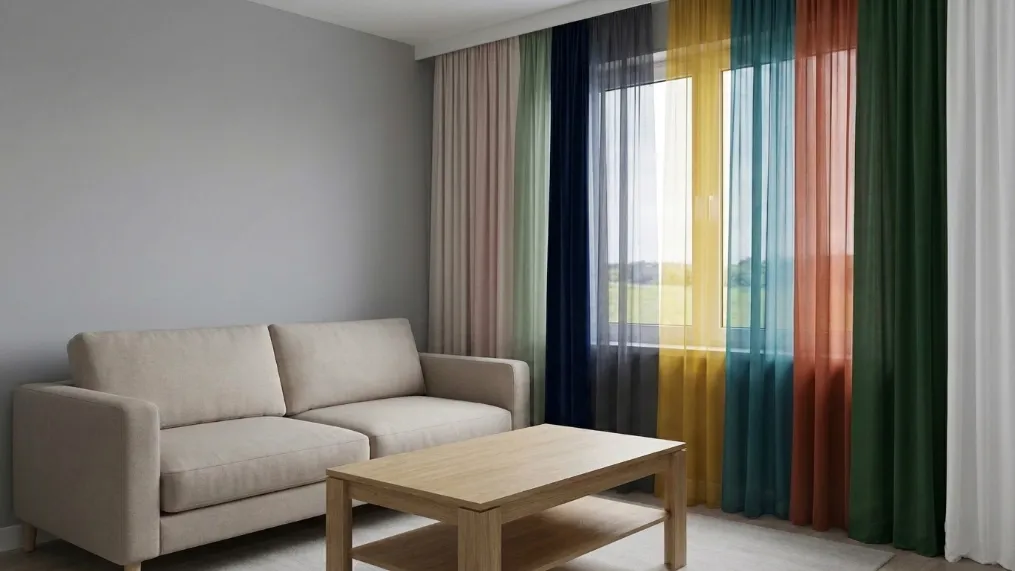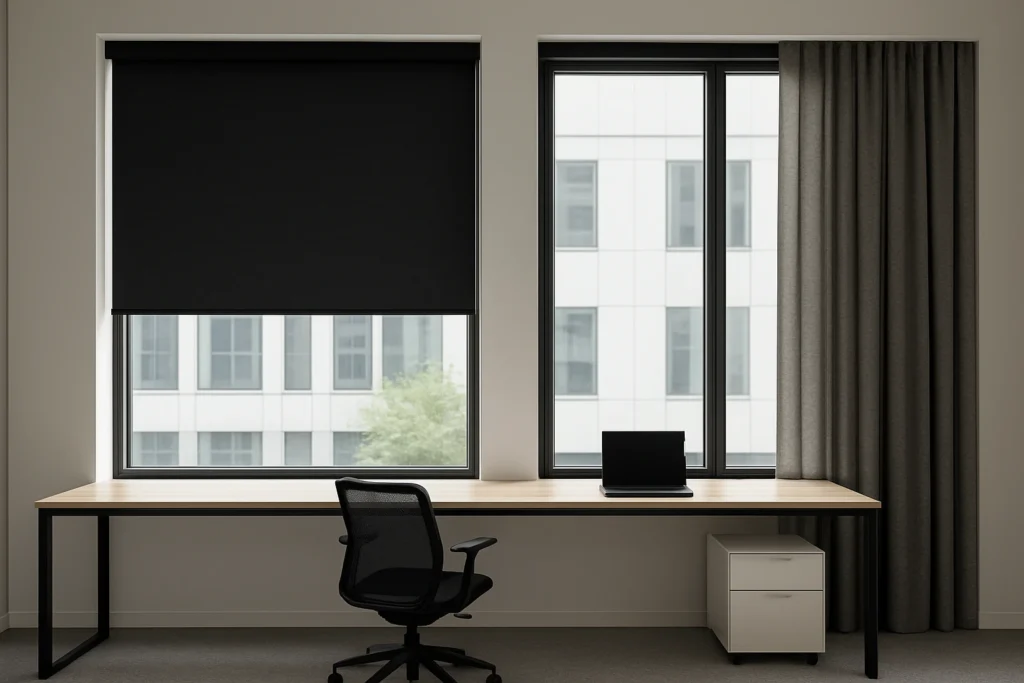
Office blinds are usually the better choice for desk areas because they offer flexible light control, take up less space and are often easier to clean. Curtains suit meeting rooms, private offices and reception areas where a softer look and less echo matter. Choose based on the window’s sun exposure, screen use and privacy needs, and combine blinds with curtains where one covering cannot meet all three.
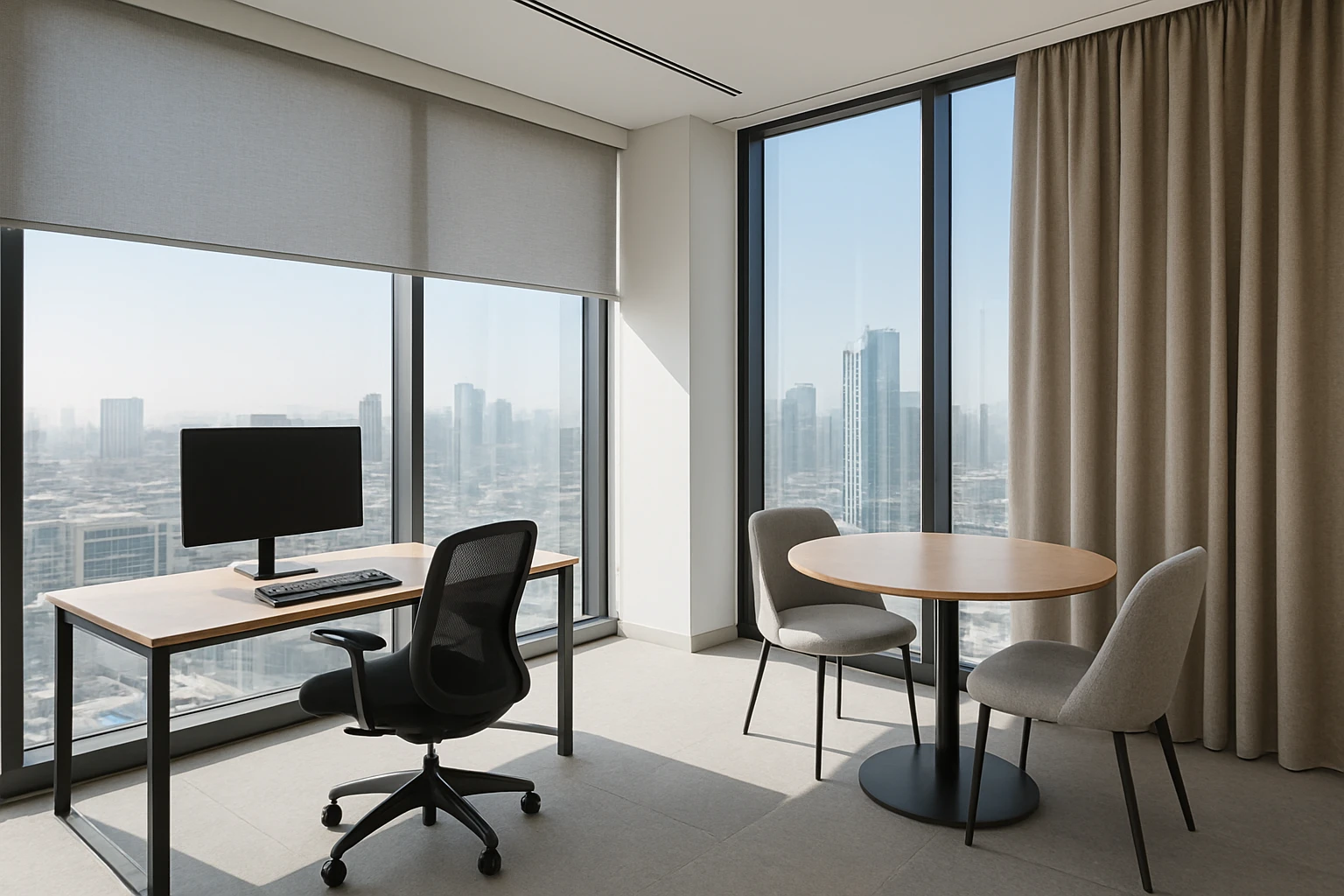
Office Blinds Vs Curtains at a Glance
Blinds tend to work best where staff need frequent control over daylight, while curtains work best where comfort, appearance and room sound matter more. Neither is always better at blocking heat or light, because the fabric, fit and gaps can matter more than the type of covering.
| What Matters | Office Blinds | Office Curtains |
|---|---|---|
| Screen glare | Slats can redirect light; roller fabrics filter it | Sheers soften light, but opaque curtains may make the room too dark |
| Privacy | Depends on fabric, slat angle and lighting | Lined or opaque fabrics provide privacy when fully closed |
| Blackout | Needs opaque fabric and careful edge detailing | Needs blackout lining, generous overlap and a suitable track |
| Heat control | Depends on fabric, reflectance, fit and glazing | Depends on lining, coverage, fit and glazing |
| Room echo | Most standard blinds offer little sound absorption | Heavy, folded fabric can reduce echo, but does not soundproof a room |
| Cleaning | Many roller and metal blinds can be dusted or wiped | Fabric may need washing or professional cleaning |
| Space around windows | Usually compact, though roller tubes need headroom | Needs room for the track and fabric gathered at the sides |
| Best Starting Point | Open-plan desks and compact work areas | Meeting rooms, private offices and reception areas |
A common mistake is to choose one style for the whole office before checking how each room is used. A work area full of screens and a client meeting room may share the same windows but need different coverings.
When comparing samples from Arabic Curtains, assess office blinds and office curtains against the same needs. Explain when the sun reaches the glass, where the screens sit and whether you need privacy after dark.
Which Controls Glare, Heat and Privacy Better?
Blinds usually offer more ways to manage daylight without covering the whole window. Curtains can give better coverage when properly lined and fitted, but neither type should be chosen from a small fabric sample alone.
Glare and Daylight at Desks
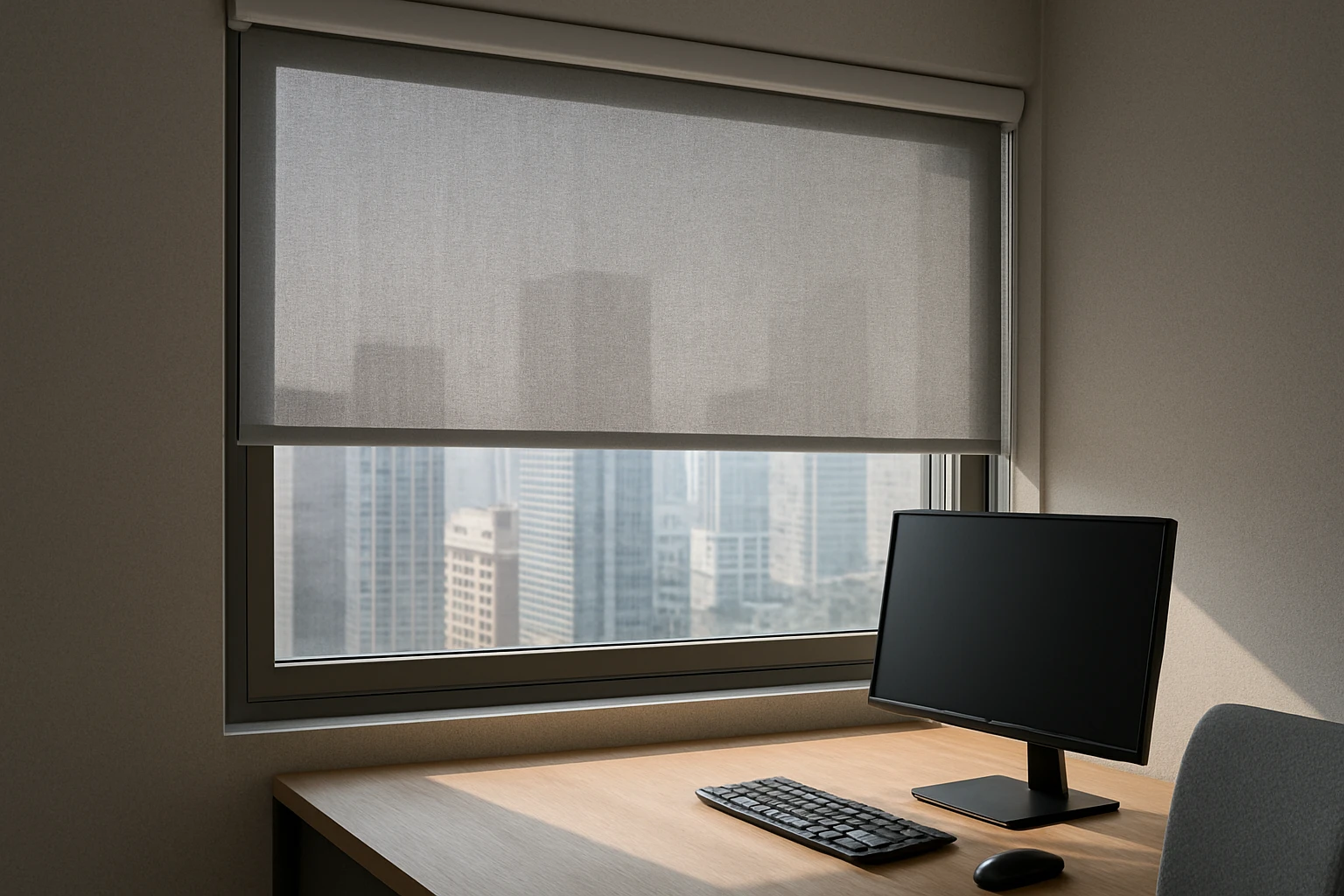
Sunscreen blinds filter sunlight while keeping some view outside. They can suit desk areas where fully closing a curtain would make staff turn on lights during the day.
Manufacturers often list an openness factor, such as 1%, 3% or 5%. This is the share of open space in the fabric weave, not the percentage of heat blocked. Within a similar fabric range, a lower figure generally means less view through the fabric and stronger light filtering. Colour and construction also affect performance.
For a west-facing desk, test a sample during afternoon sun rather than choosing it under showroom lights. Direct low sun may still cause glare through a sunscreen fabric, so a second opaque layer can be useful. Moving the screen so the window sits beside it, rather than directly in front of or behind it, can also help.
Heat Control in UAE Offices
Both blinds and lined curtains can reduce heat gain, but neither fixes poor glazing or air leaks. In a Dubai or Abu Dhabi office with large sun-facing windows, ask for data showing how the fabric handles solar heat and check whether it applies to your type of glass.
A dark sunscreen fabric may offer a clearer view outside, but that does not make it the best choice for heat control. The colour facing the glass, the fabric coating and the glazing all affect the result. Do not accept a claim that a covering will cut cooling bills by a set percentage without evidence for the actual window system.
For strong afternoon sun, favour adjustable coverage and a suitable solar-control fabric over appearance alone. Keep fabric clear of air-conditioning outlets so it does not block airflow or move across desks.
Privacy and Blackout Are Different Needs
Sunscreen blinds and sheer curtains should not be treated as reliable night-time privacy screens. Once the office is brighter than outside, people may be able to see through them.
For rooms used after dark, choose an opaque covering or add a second layer. Blackout blinds block light through the fabric, but ordinary roller fittings can still leave bright gaps at the sides. Side channels, which are tracks that cover the fabric edges, can reduce those gaps.
Blackout curtains also need overlap at the middle, coverage above the track and enough width at the sides. For presentation rooms, compare the complete fitting rather than the fabric label. This guide to blackout curtains vs blackout blinds explains that choice in more detail.
Which Blind or Curtain Type Suits Each Office Space?
The best office window treatment depends on how the room is used, not just how formal it looks. Match the product to desk positions, door access, window size and how often people need to adjust it.
| Office Space | Useful Starting Choice | Detail to Check Before Ordering |
|---|---|---|
| Open-plan desk area | Sunscreen roller blinds | Test glare at occupied desks during direct sun |
| Small private office | Roller or Venetian blinds | Check handles, opening windows and monitor reflections |
| Wide window or glazed door | Vertical or panel blinds | Keep the opening clear when fabric is gathered to one side |
| Meeting or presentation room | Blackout blind or lined curtain | Check edge light and how dark the room really needs to be |
| Reception or client lounge | Curtains, sometimes over blinds | Leave enough side space for the gathered fabric |
| Hard-to-reach glazing | Motorized blinds or curtains | Plan power, controls and maintenance access before fitting |
Venetian blinds have tilting horizontal slats, which can redirect light without fully raising the blind. They suit offices where sunlight changes through the day, though each slat adds a surface to dust. Wooden blinds give a warmer finish, but check their weight and the space they take up when raised, especially on wide windows.
For broad windows, vertical blinds let users turn the hanging strips or draw them aside. Panel blinds use wider fabric panels and can suit large openings, but the panels still cover part of the glass when drawn aside. Check that they do not block the door handle or a busy walkway.
Pleated blinds fold into a compact stack and can suit smaller windows. Do not assume every pleated blind has the insulating structure of a cellular blind, which contains pockets of trapped air.
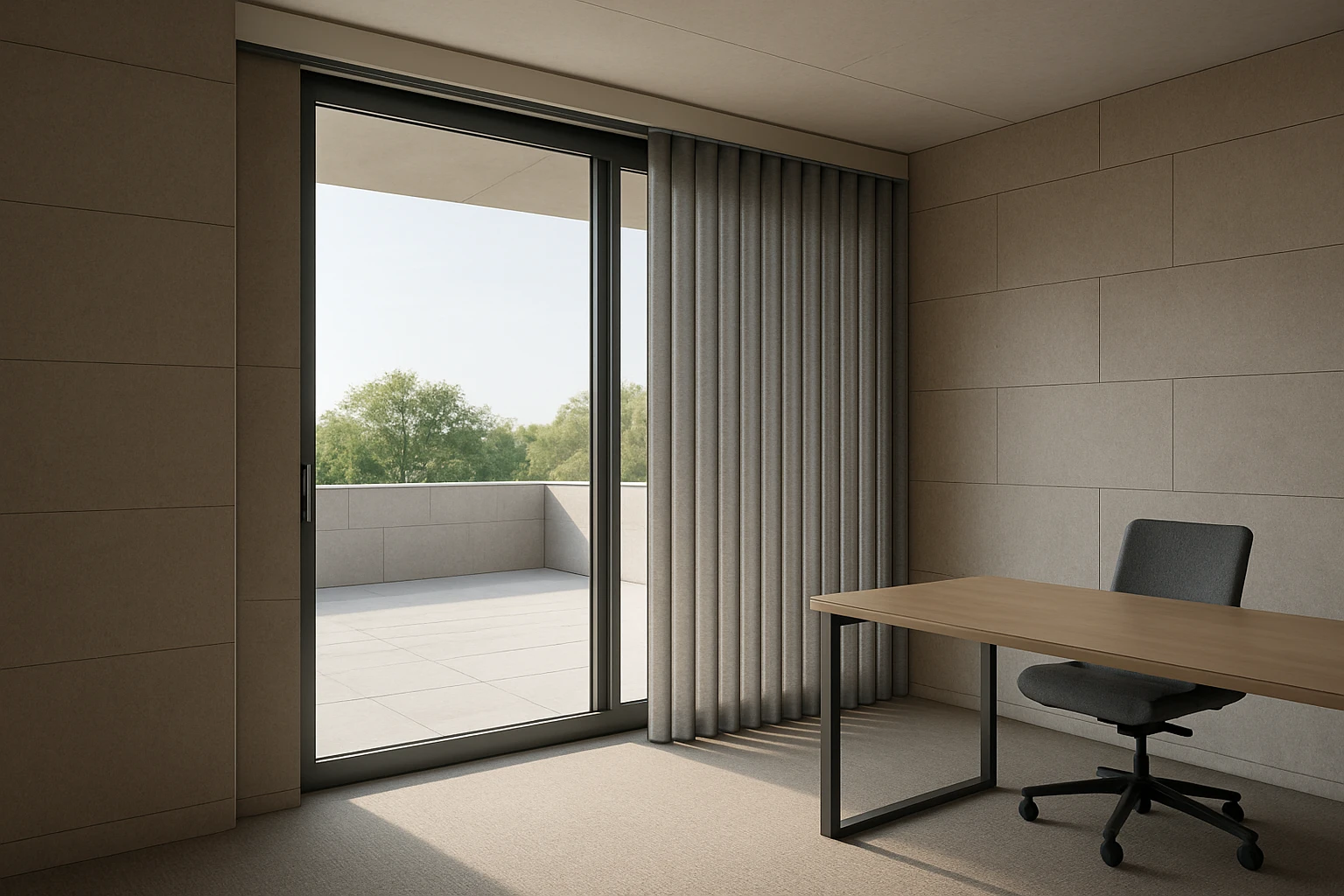
Curtains can make a sparsely furnished meeting room feel less harsh, especially where glass walls and hard floors create echo. Soft fabric absorbs some reflected sound, but standard curtains will not stop private conversations travelling through a door gap or a lightweight partition.
If the main concern is appearance, compare the available curtain types only after deciding on lining and coverage. A neat heading style, which shapes the folds at the top, will not solve glare if the chosen fabric lets too much light through.
How Much Do Office Blinds and Curtains Cost in the UAE?
Basic manual blinds often cost less than made-to-measure lined curtains, though premium blind fabrics and motors can reverse that comparison. Compare complete installed prices for the same window, because a low fabric price may leave out the parts that make the covering work.

For early budgeting, the following are broad, approximate UAE retail ranges for one straightforward window around 1.5 metres wide by 1.5 metres high. They are not quotations, and actual prices vary by supplier, emirate, fabric, access and order size.
| Basic Supply and Fitting | Rough Budget per Window | Main Reasons the Price Rises |
|---|---|---|
| Manual roller blind | AED 250 to AED 700 | Specialist fabric, better hardware or side channels |
| Manual vertical blind | AED 250 to AED 750 | Fabric grade, headrail quality and control options |
| Made-to-measure lined curtain with a basic track | AED 500 to AED 1,500 | Fabric choice, lining, fullness and track length |
These figures do not apply directly to floor-to-ceiling curtains or large curtain-wall windows. Motors, electrical work, difficult access and specialist fire-rated fabrics can also add to the bill. Ask whether VAT, fitting and removal of old coverings are included.
Compare the Whole Installed System
A blind quote may be based on the area of the window, while a curtain quote may use fabric length, track width or a complete fitted price. Ask suppliers to show the finished width and drop, or length, so you can compare the figures fairly.
For example, a curtain covering a 2-metre-wide track might use roughly 4 to 5 metres of total flat fabric width for a full look. The exact amount depends on the heading style and fabric, and the drop still affects the total fabric required. That is why a curtain cannot be priced fairly from window width alone.
Ask each supplier to include the same items:
- Fabric, lining and all tracks or brackets.
- Removal of existing fittings and repairs to any holes.
- Installation, access equipment and VAT.
- Motors, controls and any electrical work, if required.
- Warranty terms and the cost of replacing a damaged part.
Motorized blinds can make high or wide windows easier to use, but check the power source and how you will reach any batteries for charging. For curtains, electric curtain systems need a suitable powered track, not just a motor added to any existing rail. Compare motorized curtains by the fabric weight they can carry, their control options and access for repairs.
What Should You Check Before Installation?
Check the full window opening, cleaning needs and building requirements before placing an order. Most avoidable problems come from missed clearances, unsuitable fittings or fabric that is difficult to maintain in the room where it is used.

Measure for Movement, Not Just Coverage
A covering needs to clear handles and vents as well as cover the glass. A blind fitted inside the window recess can look tidy but may leave edge gaps. A blind fitted outside the recess can overlap the opening, but it needs secure fixing points above it.
Before you approve the site measurements:
- Check the width at the top, middle and bottom, and measure the drop in more than one place.
- Open each window and door fully to check the path of handles and hinges.
- Check recess depth, blind tube space and room for curtains to gather at the sides.
- Confirm the wall or ceiling can support the fitting, especially for heavy curtains and wide tracks.
- Keep fabric away from floor boxes, air outlets, sprinklers and escape routes.
Do not subtract fitting allowances from your own measurements unless the supplier asks you to. Some suppliers want the recess size and make their own allowance, while others ask for the finished blind size.
Plan Cleaning and Check Fabric Documents
Smooth roller fabrics can be easier to maintain than deep curtain folds, but not every blind fabric is washable. Check the care label before using water or cleaning products, since coatings and backing layers can be damaged.
Venetian slats need more detailed dusting, while curtains may need removal and professional cleaning. For a busy office, ask who will take them down, whether the lining can be cleaned with the outer fabric and how long the window will be uncovered.
Before ordering for a commercial building, ask the landlord or fit-out manager which fire-safety documents are required. A claim that fabric is flame-retardant is not enough on its own. Request the relevant test certificate and confirm that the building team accepts it for the intended use. Do not assume ordinary lining meets the same requirement as the outer fabric.
Choose cordless or properly secured controls where children may visit. For powered systems, confirm how you can operate the covering during a power failure and reach the motor without removing fixed cabinets or panelling.
Should You Choose Blinds, Curtains or Both?
Choose blinds for most desk-based workspaces, curtains for rooms where softness and reduced echo are priorities, and both where the room needs flexible daylight control plus full privacy. A combined system is useful only when each layer solves a separate problem.
For example, a west-facing meeting room may use a sunscreen blind during normal meetings and a lined curtain for presentations or evening privacy. This gives more control than choosing a very dark curtain and keeping it closed all day. The trade-off is a higher cost, more cleaning and extra space above and beside the window.
Before choosing two layers, confirm that the curtain will clear the blind brackets and that both controls remain easy to reach. These ways to pair curtains and blinds offer useful layouts, but the fitting depth should be checked on site.
For a straightforward office purchase, use this final test:
- If staff mostly work at screens, start with a blind and test a large fabric sample at the desk.
- If the room hosts clients or sounds harsh, consider lined curtains without treating them as soundproofing.
- If presentations and daylight work share one room, compare the price of a two-layer system with a well-fitted blackout blind.
- If the covering will be hard to reach, decide on motor power and maintenance access before finishing the ceiling.
The best choice is the one staff can adjust easily throughout the day. Test the proposed setup when glare or direct sun is at its worst, then approve the fabric, fitting details and installed price together.
Frequently Asked Questions
Can I Fit Office Blinds Without Drilling in a Rented Office?
Some office blinds can use no-drill brackets, but only where the window frame and blind system are compatible. Adhesive fittings may not suit heavy blinds or hot, sun-facing glass. Get written approval from the landlord and ask the supplier to confirm the load limit and any risk of damage to the frame.
What Colour Blinds Work Best Behind a Video Call Desk?
A plain, matte, mid-tone blind often works well behind a video call desk because it creates a calm background without strong reflections. Avoid direct sunlight behind your head, since the camera may make your face look dark. Test a sample on your usual camera with the room lights and daylight both present.
Can Old Office Blinds Be Repaired Instead of Replaced?
Office blinds can often be repaired when the fault is limited to a chain, bracket, control part or replaceable fabric strip. Repair is less useful when several parts are worn or matching components are no longer available. Ask for separate repair and replacement prices, including labour, so a small saving does not leave you with repeated faults.
Do Motorized Office Blinds Need Wi-Fi?
Motorized office blinds do not always need Wi-Fi, since many systems use a dedicated remote or wall switch. App control and wider building controls may need a hub or network connection. Confirm which functions still work without internet access, and check that office staff can use the basic controls without a personal phone.
Are Curtains Suitable for Glass Office Partitions?
Curtains can provide visual privacy across glass office partitions when there is a suitable place to fix the track. They do not turn a glass meeting room into a soundproof room, and they must not obstruct doors or safety systems. Check ceiling support, track clearance and cleaning access before choosing the fabric.